
Dear Ava,
On the night before your first day of kindergarten in August 2005, your parents started a blog. I didn’t really know what a blog was, but I remember sitting down to write my first post that night in the little sunroom off our bedroom in San Francisco as if it were yesterday. I wrote about how we helped prepare you for school and what was on my mind as you set off for such a big adventure. What a milestone in our lives that was!
On this, the night before your last day of senior year in high school, with college on the immediate horizon, this paragraph of that kindergarten eve post brings tears to my eyes:
Everyone asks if we’re nervous or sad about this big change. I can’t speak for Matt, but I’m mostly just excited. I don’t feel nervous at all, and sad? – no. It’s more like nostalgia for me. Amazing how quickly we’ve gotten to this night, and how much Ava has changed in these four-and-three-quarter years. But she couldn’t be more ready for this new adventure, and I feel confident that she’s completely up for it. That much was clear when we watched her bolt up the unfamiliar school stairs in search of the play yard on Friday. So I feel ready, as ready as that backpack and lunchbox and fresh outfit all laid out in her room. Then again, maybe that’s just tonight.
There was so much I knew about who you were at age almost-five, and a great deal I could have guessed at if anyone had asked me what you’d be like as you’re leaving high school and home. But there were a few things I never could’ve known back then.
I knew you had a great sense of humor when you went off to kindergarten, but I didn’t know that you’d be making me fall over laughing just about every day as a high school senior with your dry and very quick wit.
I knew you could chant for a Democratic candidate with the best of them, but I didn’t know you’d be following politics and world events as closely as I am in 2018. Thanks for marching with me this year and for paying attention. I’m sorry you won’t be 18 in time for the midterms.
I knew then that you loved music and that each time I was about to turn up one of my favorite songs you’d call out from the back seat of the car to ask me to turn it up. “I love this one!” you’d crow from your booster seat. But I didn’t know that we’d be touring colleges all over the midwest years later, belting out the Hamilton soundtrack together in the car over and over from Illinois to Minnesota to Iowa. I should’ve known you’d be able to memorize every word, though, you always could do that.
I didn’t know that my little one who avoided writing and drawing at that age would make me hilarious hand-drawn cards every Mother’s Day and birthday year after year, all the way through high school, gifting me a treasure trove of delightful cards to enjoy long after she leaves home.
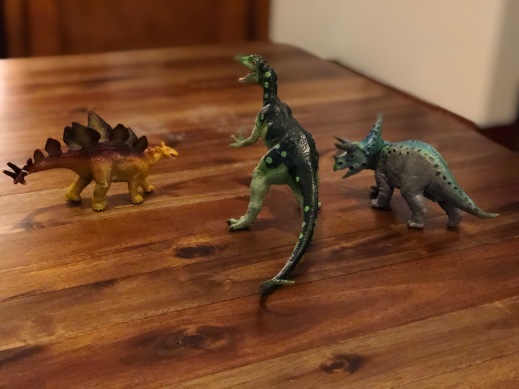
I knew that you loved animals, particularly dinosaurs, the day you went off to kindergarten, and that you wanted to be a zoologist or paleontologist when you grew up. You slept with a visual animal dictionary under your pillow, after all. But with all the interest in math and computer science during the intervening years, I didn’t know that by the end of your senior year you’d be hoping to study biology – with an eye toward zoology – in college. When you went to the 2-day event for admitted college students this past spring, you told me the best class you sat in on was zoology and that on the day you visited they were learning about dinosaur sex. See? College is going to be awesome, kid.
Just as I felt that night before kindergarten so many years ago – before Pokemon and Bey Blades and our move to Chicago and the changes in our family, the stapled bonus jaguar and summers at our little urban beach on Columbia Ave. and all those other Explore More projects and before the glasses and the braces and then adjusting to the lack of braces and the contacts and the new friends and all the crazy house moves and the Pathfinder and the Magic the Gathering and the Dungeons and Dragons and the college tours and you Rick Rolling me on the Sonos and trips to California and long road trips together and all those big high school kids gathered around the dining room table playing games and eating pizza and dropping f-bombs and all the laughs at the dinner table and the night you managed to get tomato soup all the way onto the wall across the room (we still don’t know how you did it) and a million bedtime hugs and I love yous – I feel exactly the same way about the milestone you have now approached. That is:
I’m mostly just excited. I don’t feel nervous at all, and sad? – no. It’s more like nostalgia for me. Amazing how quickly we’ve gotten to this night, and how much you have changed in these 17-and-a-half years. And also, in hindsight, all the ways you are exactly who you were at 4-and-three-quarters. But now, like then, you couldn’t be more ready for this new adventure, and I feel confident that you are completely, 100%, up for it. Also, looking back at kindergarten eve, it’s great that you make your own lunch and pick out your own clothes, so thanks for that.
Go take on the world, my love. The world is a wonderful place with you in it and every new person and place you meet will be made better for knowing you.
Love, Mom
June 5, 2018


 The Wonderwheel